THE ‘CONVENIENCE TAX’: Why Gen Z Are Paying Nearly Double for Everyday Purchases

Author : Ines Szulc
Published: - Updated on:

The UK's Corner Shop Markup Gap

Convenience has always come at a cost, but new data suggests that cost is rising fast, and younger shoppers are paying the highest price.

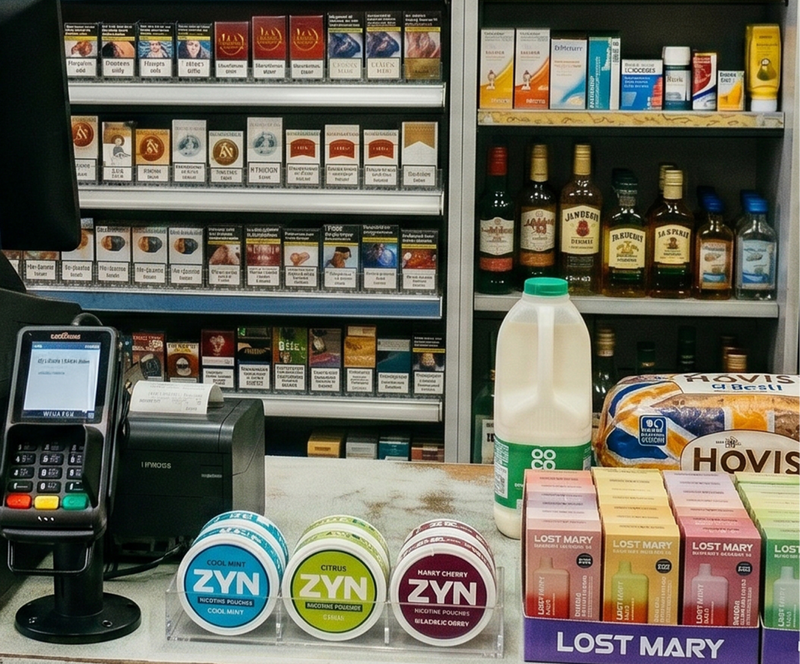
A recent study of 2,000 UK consumers reveals a growing “convenience tax” across the country, with nearly half of shoppers willingly paying above retail prices for everyday items like snacks, vapes, alcohol, and nicotine pouches. What was once a small premium for speed is quickly becoming a routine expense, especially for Gen Z.

What Is the “Convenience Tax”?

The “convenience tax” refers to the extra amount consumers pay for quick, easy access to products, typically in corner shops or local stores. Instead of travelling to a supermarket or searching for better value, shoppers are choosing immediacy, even if it costs more.

According to the data:

  • 49% of UK shoppers knowingly pay a markup
  • The average markup sits at £5.04 per purchase
  • Nearly half of Gen Z are paying £5+ extra for everyday purchases.

This shift signals a major change in buying behaviour, where time and accessibility are often valued more than price

The Gen Z Premium

The data highlights a dramatic generational divide in spending behaviour.

  • 46% of 18–24-year-olds say they regularly pay markups of £5 or more
  • 17% of Gen Z admit to spending over £10 extra on a single convenience purchase
  • By comparison, just 4% of over-65s pay £5+ markups
  • Only 2% of over-65s report spending £10+ extra

At the other end of the spectrum, 42% of Baby Boomers say they have never knowingly paid a markup at all, compared to just 14% of Gen Z.

Average Markup by Age Group:

  • Gen Z (18–24): £6.08
  • Younger Millennials (25–34): £5.72
  • Millennials (35–44): £5.08
  • Gen X (45–54): £4.81
  • Boomers (55–64): £3.98
  • 65+: £3.23

The findings suggest that for younger consumers, price sensitivity is rapidly being replaced by a preference for immediacy.

Nicotine pouch comparison by brand and attribute
Attribute 18 to 24 25 to 34 35 to 44 45 to 54 55 to 64 65 and over
Average Markup Paid (£) £6.08 £5.72 £5.08 £4.81 £3.98 £3.23
Paid High Markup (£5+ Extra) 46% 38% 27% 18% 12% 4%
Never Paid a Markup 14% 10% 13% 19% 28% 42%

The Rise of The “Convenience Tax”

This growing willingness to pay more has given rise to what’s increasingly being described as a “convenience tax”, the extra cost shoppers accept in exchange for speed, accessibility, and instant gratification.

While older generations still view corner shops as a last resort for essentials, younger consumers are treating them as a primary destination for “everyday purchases”, whether that’s a drink, a snack, or a nicotine product.

Rather than seeking value, they are prioritising proximity and convenience, even when it comes at a premium.

London: The UK’s Markup Capital

Where you live also has a major impact on how much you pay.

London has emerged as the “markup capital of the UK”, with residents paying an average of £5.83 extra per visit.

Average Markup by Region:

  • London: £5.83
  • Northern Ireland: £5.63
  • North West: £5.37
  • West Midlands: £5.26
  • North East: £5.06
  • East of England: £5.04
  • Wales: £4.84
  • East Midlands: £4.77
  • Yorkshire and the Humber: £4.62
  • Scotland: £4.46
  • South West: £4.46
  • South East: £4.40

It’s not just the averages that stand out. 41% of Londoners regularly pay £5 or more in markups, compared to just 16% in the South East. This suggests that higher premiums are not only common in London, they’re widely accepted.

The gap between regions shows that while the convenience tax is widespread, its impact varies significantly depending on local shopping habits and cost of living.

A Shift in How We Value Time vs Money

The data points to a broader shift in consumer mindset. Cormac Folan, CEO of Two Wombats commented the following:

“We are seeing a clear divide in how different generations value their time versus their money. For younger consumers, the ‘Convenience Tax’ is a price worth paying. They aren’t looking for a bargain; they are looking for an immediate solution to a want or desire. For the older generation, the psychological barrier of paying more than the RRP remains a significant deterrent.”

This shift reflects changing lifestyles, from busier urban living to more impulse-driven purchasing habits, where convenience is no longer occasional, but expected.

What This Means for UK Retail

The corner shop is no longer just a backup option. For many younger consumers, it’s becoming a go-to retail channel for small, frequent purchases, despite higher prices.

With London leading the way and younger generations paying the highest markups, the “convenience tax” is no longer a niche trend. It’s becoming a defining feature of modern retail.

As this behaviour continues, the “corner shop markup gap” is likely to widen, reshaping not just how people shop, but how retailers price convenience itself.